阿凡提的故事A Fan Ti De Gu Shi
The Story of Effendi
The mischievous sage of Xinjiang and his little donkey, in puppet form
Synopsis
The Story of Effendi (阿凡提的故事, A Fan Ti de gu shi), called Effendi in the English subtitles, is a series of puppet animation films from the Shanghai Animation Film Studio. It adapts the folk tales of Xinjiang about Nasreddin, here named Afanti: a cunning, fun-loving man of the people, riding his little donkey, who defends ordinary folk against greedy notables, cruel lords and even the king.
Each episode is a standalone story of about 20 to 30 minutes, built on a battle of wits: Afanti turns the schemes of the stingy rich man (the bai) or the tyrant against them, with humor and without violence. The music, costumes and sets draw heavily on Xinjiang culture.
The first film, Planting Gold (种金子), was released on September 17, 1979. It was followed by 13 episodes made between 1981 and 1988, for 14 episodes in total. A childhood classic for a whole generation in China, and worth discovering for the history of Chinese animation.
Where to watch The Story of Effendi in France
In France: legal options
No official release in France for now. To watch it legally, use the Chinese platforms that stream it internationally.
Official international platforms
Official streaming outside France, usually with English subtitles. French subtitles and access from France vary by title.
Checked on October 12, 2026 on JustWatch France. Catalogues change often. All platforms
World
The story takes place in a fairy-tale world of Xinjiang, among bazaars, villages and palaces, where ordinary people rub shoulders with bai (wealthy landowners), judges, lords and a king. The mechanics are those of the Nasreddin tales, widespread from Turkey to Central Asia: popular wisdom triumphs over the stupidity and greed of the powerful.
Reception & popularity
The 1979 film received the Ministry of Culture's excellent film award, then the award for best art film (美术片) at the Hundred Flowers Awards in 1980 and a Tenglong award for minority-themed cinema. The series also won first prize at the Chicago International Children's Film Festival. On Bangumi, it holds about 7.5 out of 10 from more than 1,600 votes.
My take
The series is best watched as a string of mischievous tales rather than a story to follow. Its appeal lies in the figure of Afanti, funny, generous and always one step ahead, and in the simple mechanics of the stories: an abuse, a trick, a punchline. Chinese audiences see it as a very strong childhood memory, and the Bangumi score remains solid for a series of that era.
The puppets, with their highly expressive faces, and the Xinjiang-inspired music give it an obvious charm, but the animation is slow and the morals are very clear, sometimes predictable. The early episodes also bear traces of their time, with a sharp opposition between the people and the powerful. Worth watching out of curiosity and for the poetry of the handcrafted work, not for the action.
Who is it for?For fans of puppet animation and folk tales, and for those who want to know a classic of Chinese childhood. Less suited to anyone looking for a fight story or a continuous plot.
Main characters
More character profiles are coming.

Trivia
- The 1979 film is a tribute produced by the Shanghai Animation Film Studio for the 30th anniversary of the People's Republic of China, the same year as Ne Zha Conquers the Dragon King.
- Afanti is voiced by Bi Ke (毕克), a major Shanghai dubbing voice; Wikipedia also cites Cheng Zhi (程之).
- The character derives from Nasreddin Hodja, a figure of Turkish folk humor whose stories circulate from Central Asia to the Arab world. In 2022, the tradition of Nasreddin tales was inscribed on UNESCO's Intangible Cultural Heritage list.
- In 2013, the studio brought a lawsuit for copyright infringement over the puppet characters against a publisher and the director Qu Jianfang.
Community Reviews
No published reviews yet. Be the first to share your thoughts.
Sign in to post a review: Sign in
If you liked…
More donghua to discover after The Story of Effendi: same author or same genres.
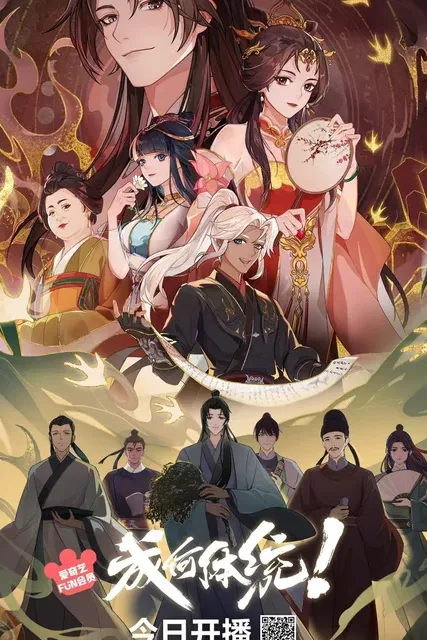
Shared genres: Comedy, Historical
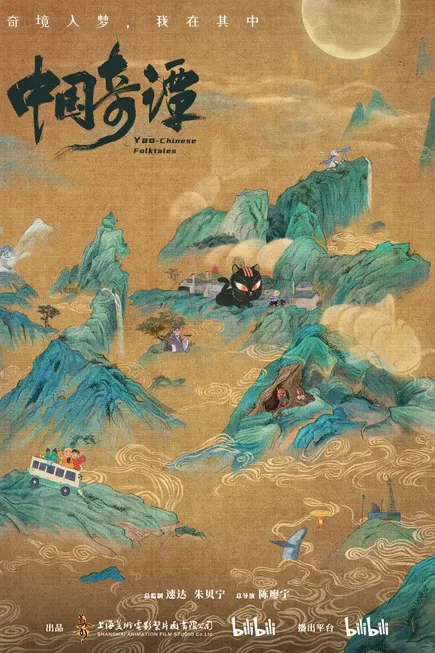
Shared genres: Comedy, Historical

Shared genres: Comedy, Historical