九色鹿Jiu Se Lu
A Deer of Nine Colors
The 1981 masterpiece inspired by the Buddhist murals of Dunhuang
Synopsis
A Deer of Nine Colors (九色鹿, Jiu se lu) is an animated short film of about 25 minutes, produced in 1981 by the Shanghai Animation Film Studio. It is inspired by a Buddhist tale, the Jataka of the Deer King (鹿王本生), depicted on a mural in the Mogao caves at Dunhuang. In the desert, a sacred deer with a nine-colored coat guides a caravan of Persian merchants lost in a sandstorm.
Back in the forest, the deer hears the cries of a snake charmer who has fallen into a river and saves him. In gratitude, the man swears never to reveal the deer's existence. But when the queen of the neighboring kingdom demands its skin to make a coat and the king promises a reward, the charmer gives in to greed: he betrays his promise and leads the soldiers to the animal.
Surrounded, the deer sees the soldiers' arrows reduced to ashes by its light, then denounces the charmer's ingratitude before the king. The traitor, seized by terror, falls into the river and drowns. It is a fable about the debt of gratitude and the punishment of betrayal, short and easy to watch in one sitting.
Where to watch A Deer of Nine Colors in France
In France: legal options
No official release in France for now. To watch it legally, use the Chinese platforms that stream it internationally.
Official international platforms
Official streaming outside France, usually with English subtitles. French subtitles and access from France vary by title.
Checked on October 12, 2026 on JustWatch France. Catalogues change often. All platforms
World
The story takes place in an ancient kingdom on the Silk Road, between an arid desert, a forest and a river, then the court of a king and his queen. The world remains that of a Buddhist legend: a sacred animal distinguishes good from evil, and cruel acts bring moral punishment.
Reception & popularity
The film has remained one of the classics of 1980s Chinese animation. According to Chinese entries, it reportedly received a special honorary prize in 1986 at the Hamilton animation festival in Canada, and a national science and technology prize in 1985 for its animation technique. Several other awards cited here and there differ depending on the source and are not retained. On Bangumi, it hovers around 7.7 out of 10 from about 1,700 votes.
My take
A Deer of Nine Colors stands out first for its imagery: sets and characters take up the lines, flat color areas and colors of the Dunhuang murals, and the film gives the impression of unfolding on a painted scroll. It is far from Western animated tales, and that is precisely what still fascinates critics.
The story itself is simple: a moral fable about ingratitude, without nuance or suspense. It lasts only about twenty-five minutes, which is a virtue here. It is a heritage work to watch for its art direction and its place in the history of Chinese animation, more than for its pacing or psychological depth.
Who is it for?For the curious about the history of Chinese animation, fans of Buddhist art and Silk Road murals, and those who want a short, visually beautiful work. Not for viewers looking for action or an elaborate plot.
Main characters
More character profiles are coming.

Trivia
- The screenplay is by Pan Jiezi (潘絜兹), a painter who specialized in Dunhuang murals, and the direction by Qian Jiajun (钱家骏) and Dai Tielang (戴铁郎).
- Set designer Feng Jiannan (冯健男) and character designer Hu Yongkai (胡永凯) reportedly copied murals on site in Dunhuang before designing the film, according to Chinese sources.
- The music is by Cai Lu (蔡璐) and Wu Yingju (吴应炬), performed by the Shanghai film orchestra.
- The deer is voiced by Ding Jianhua (丁建华), a renowned voice actress of the Shanghai dubbing studio.
Community Reviews
No published reviews yet. Be the first to share your thoughts.
Sign in to post a review: Sign in
If you liked…
More donghua to discover after A Deer of Nine Colors: same author or same genres.
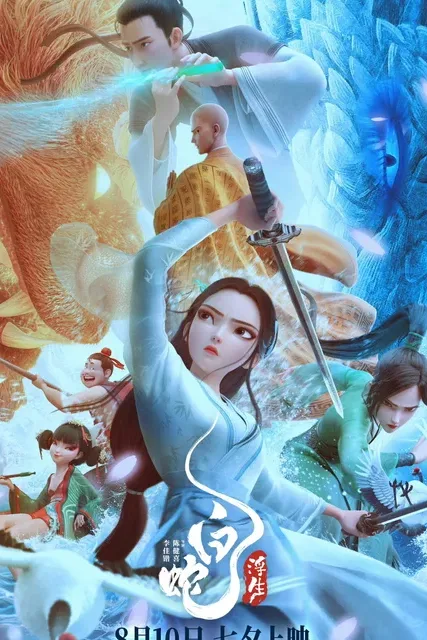
Shared genres: Fantasy, Historical
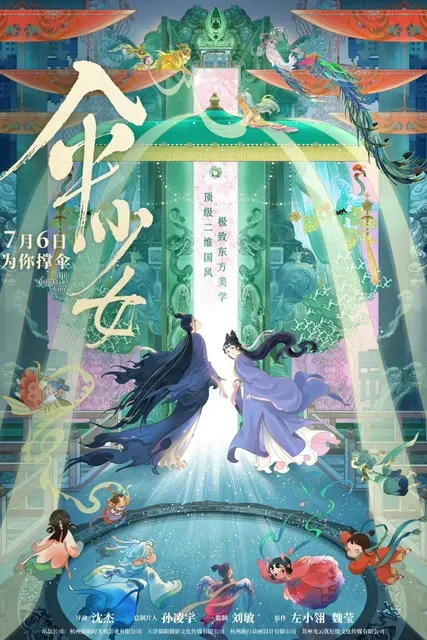
Shared genres: Fantasy, Historical
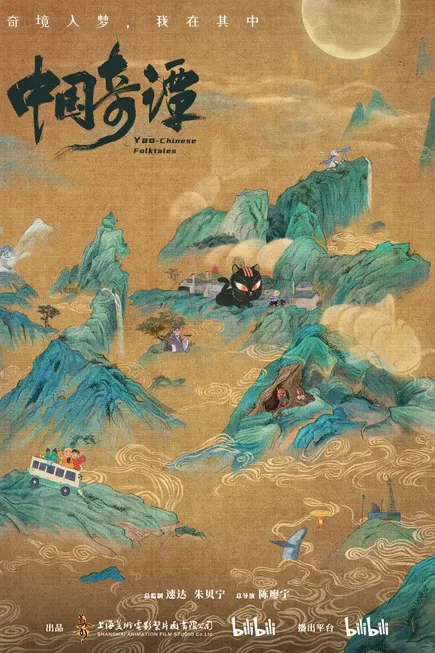
Shared genres: Fantasy, Historical