葫芦兄弟Hu Lu Xiong Di
Calabash Brothers (Hu Lu Xiong Di)
Seven brothers born from a magic calabash unite their powers to defeat the Snake and Scorpion demons
Synopsis
Two demons, a scorpion and a snake woman, were sealed under Calabash Mountain. A pangolin digging through the rock frees them by accident. An old man then learns that a legend foretells seven brothers able to stop them: he plants the legendary seed, and seven children are born from seven calabashes of different colors, each with a power of their own.
The brothers do not triumph at the first attempt: they are first captured by the demons before uniting to defeat them. Their gifts complement one another, from the colossal strength of the first to the very sharp sight and hearing of the second, from the iron body of the third to the fire of the fourth, from the water of the fifth to the invisibility of the sixth, up to the magic calabash of the seventh, who has no power of his own but sucks in whatever is thrown at him.
Thirteen episodes of about ten minutes, roughly 130 minutes in total: it is one of the shortest entry points of this hub, and a classic of Chinese animation, produced by the Shanghai Animation Film Studio in 1986. A sequel, Hulu Xiao Jin Gang (6 episodes, 1989 to 1991), then brings the brothers back against the snake woman's sister.
Where to watch Calabash Brothers (Hu Lu Xiong Di) in France
In France: legal options
No official release in France for now. To watch it legally, use the Chinese platforms that stream it internationally.
Official international platforms
Official streaming outside France, usually with English subtitles. French subtitles and access from France vary by title.
Checked on October 12, 2026 on JustWatch France. Catalogues change often. All platforms
World
The story takes place in a legendary China, at the foot of Calabash Mountain, where an old grandfather and simple villagers live. No empires or sects: the setting is deliberately reduced to the mountain and a cave, a choice tied to a tiny budget as much as to the spirit of the folk tale the series is drawn from.
Power system
There is no cultivation system. Each brother receives at birth a unique power, associated with a color: red for strength, orange for far sight and keen hearing, yellow for an iron body, green for fire, cyan for water, blue for invisibility and purple for the magic calabash. The logic is that of the fairy tale: the powers work through complementarity, and victory comes from their union.
Reception & popularity
Hu Lu Xiong Di is considered one of the most influential Chinese cartoons: only Havoc in Heaven (1960s) is more often seen as a reference. For a whole generation of children in the 1980s and 1990s, it is a formative memory. It received an award from the Ministry of Radio and Film (1986 to 1987) and, according to Wikipedia, a prize at the Cairo International Film Festival for Children. It has also been criticized for the violence of some scenes. Its community score on Bangumi is 7.8.
My take
Hu Lu Xiong Di is not a series you watch for visual one-upmanship: it is a paper-cut tale, with a deliberately simple line, which Chinese critics rank among the great names of the country's animation. Its strength lies in its readability: seven brothers, seven colors, seven powers, and villains you identify in a second.
The thirteen ten-minute episodes can be watched in an afternoon, which makes it a good first contact with the Shanghai animation tradition. You have to accept the pacing of a children's tale, sometimes abrupt violence and very limited means. It is above all a heritage piece, rather than a modern spectacle.
Who is it for?Worth watching to understand classic Chinese animation, out of historical curiosity or to see where some of the genre's codes come from, rather than for the spectacular 3D of current donghua.
Main characters
More character profiles are coming.


Trivia
- The original project was called Ten Brothers (十兄弟), based on a folk tale. The director Hu Jinqing cut the number to seven to reduce costs.
- The budget was tiny: Hu Jinqing mentions about 60,000 yuan, or five to six yuan per frame, whereas a Hollywood cartoon episode cost about a million.
- The style is deliberately pared down: the designer Wu Yunchu sought to preserve the beauty of paper cutting and a traditional Chinese look, far from Japanese and American cartoons.
- The series is presented as the first Chinese paper-cut series, mixing hand-painted animation and paper cutting.
Community Reviews
No published reviews yet. Be the first to share your thoughts.
Sign in to post a review: Sign in
If you liked…
More donghua to discover after Calabash Brothers (Hu Lu Xiong Di): same author or same genres.
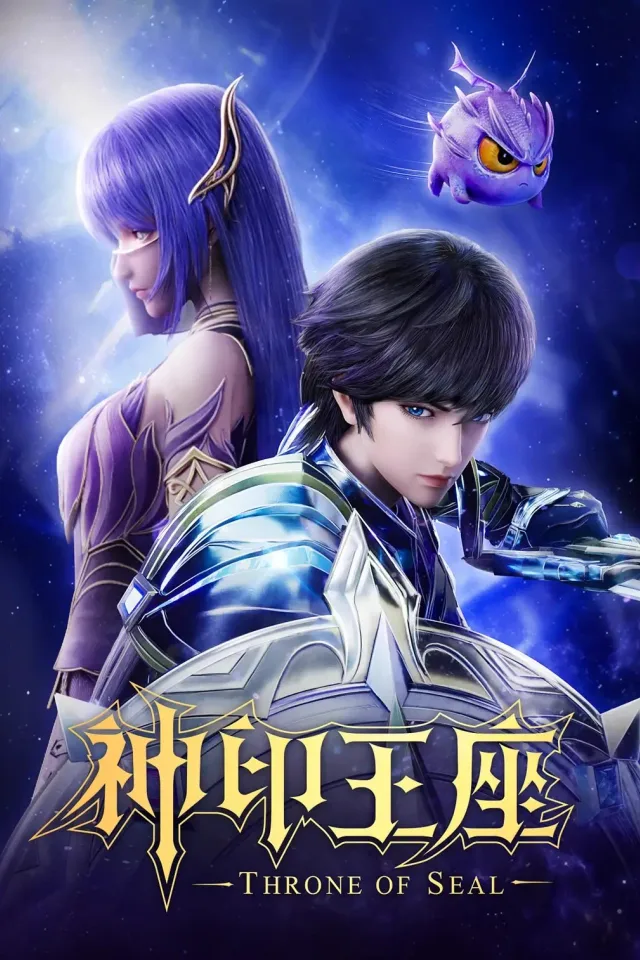
Shared genres: Fantasy, Action
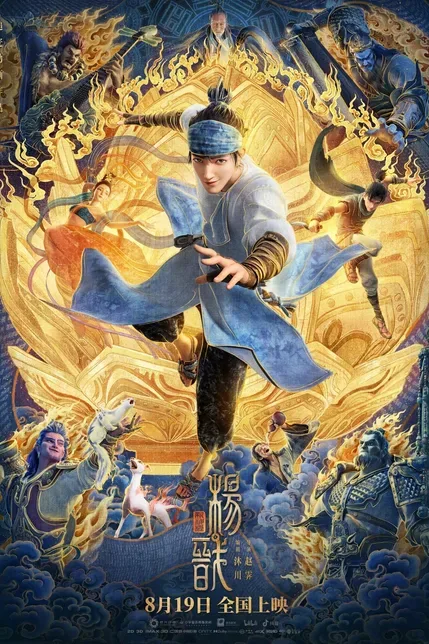
Shared genres: Fantasy, Action
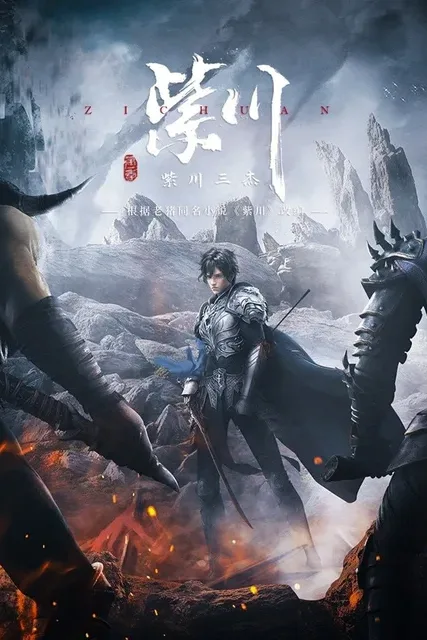
Shared genres: Fantasy, Action